


Whatever: Whatever is Excellent or Praiseworthy
This final message in the “Whatever” series calls us to win the battle for our minds by focusing on what is true, pure, and praiseworthy—choosing God’s best over what’s easy or familiar. Using examples from Abraham, Lot, and Ruth, John Mark urges us to seek God’s approval, be salt and light in our workplaces, and finish strong by living for what matters most.
Small Group Leader Guide
Sermon Recap 🎬️
This sermon, "Whatever: Whatever Is Excellent or Praiseworthy," challenges believers to win the battle of their minds by intentionally focusing on what is true, noble, right, pure, lovely, admirable, excellent, and praiseworthy, as encouraged in Philippians 4:8. It emphasizes that instead of conforming to the world's patterns, we are transformed by renewing our minds (Romans 12:2), a process akin to neuroplasticity, where new, righteous thought patterns are consistently chosen over old, destructive ones.
To live a life that truly matters most, the message outlines four key principles. First, we must pursue God's best, not our own. This is illustrated by the contrasting choices of Abraham and Lot in Genesis 13. Lot chose what looked appealing to his eyes, leading him toward Sodom and Gomorrah, while Abraham, trusting God, allowed Lot to choose first, demonstrating faith in God's provision. Similarly, Ruth chose faith and commitment to Naomi and her God over the familiar, convenient path back to her own people, ultimately placing her in the lineage of Jesus.
Second, we are called to always seek God's approval, not man's. The sermon highlights Paul's example, who, despite opposition, sought to please God alone (Galatians 1:10, 1 Thessalonians 2:1-4). Our focus, guide, motivation, security, and ultimate goal should stem from God's perspective, not from the desire for human applause, which can become our "kryptonite" when criticism arises.
Third, we are to point people to Jesus by living as the "salt of the earth and light of the world" (Matthew 5:13-16). As salt, we are meant to preserve a decaying culture, flavor conversations with grace, truth, and love, and make people thirsty for Christ. This means actively connecting with our communities rather than withdrawing. A practical acrostic for SALT is provided: Show the love of Jesus, Add value to others, Live differently in attitude and actions (Colossians 3:17, 23-24), and Tell others about Jesus.
Finally, the sermon encourages us to finish strong. Like Paul, who declared he had not already obtained his goal but pressed on, forgetting what was behind and straining toward the heavenly prize (Philippians 3:12, 2 Timothy 4:7-8), we are called to endure. Choosing commitment over convenience, even when it is hard, allows us to leave a legacy that truly matters to our families, church, and community, honoring God to the very end.
If people's applause is your fuel, their criticism will be your kryptonite.
Discussion Questions 💬
How do you pursue God’s best over our own desires?
The sermon contrasts Lot, who chose what looked good to his eyes without consulting God, with Ruth, who chose commitment and faith over familiarity. How do we discern God's 'best' path for our lives, especially when a 'good' or 'convenient' path seems appealing or easier to us? The sermon highlights that God's path, though sometimes harder, ultimately leads to greater blessing and aligns with His divine purpose for us.
What does it mean to seek God’s approval?
The sermon emphasizes that 'if people's applause is your fuel, their criticism will be your kryptonite,' and encourages us to have an 'audience of one'—God. How does intentionally seeking God's approval, rather than man's, empower us to live with greater security and faithfulness in a world often driven by external validation? This perspective frees us from the constant need for human affirmation, allowing our work and actions to become sacred acts of worship.
What practical steps can you take to be salt and light in the world and in your everyday life?
Jesus called us to be 'the salt of the earth and the light of the world,' not just the church. What practical steps can we take to intentionally 'salt' and 'light' our everyday interactions and communities, rather than withdrawing from them? We are called to preserve decaying culture by standing for God's truth, flavoring conversations with grace and love, and pointing people to Jesus through showing love, adding value, living differently, and telling others about Christ.
How can you press on to finish strong? What does it mean to do this?
Paul declared, 'I press on to take hold of that for which Christ has taken hold of me,' emphasizing 'forgetting what is behind' and 'straining toward what is ahead.' How can we adopt Paul's mindset of continuous spiritual progress in our own lives, particularly when facing past failures, hurts, or even successes? This mindset reminds us that our identity and purpose are in Christ, encouraging us to create new paths of righteous thinking and action in response to God's heavenly call.
Prayer 🙏
May our minds be transformed by consistently choosing to focus on what is true, noble, and praiseworthy, aligning our thoughts and actions with God's best path for our lives.
May we cultivate a deep desire to seek God's approval above all else, trusting His guidance in our choices rather than being swayed by human applause or convenience.
May we live as effective salt and light in our daily interactions, actively showing the love of Jesus, adding value to others, and preserving culture with God's truth.
May we embrace the commitment to press on towards God's heavenly call, forgetting past failures and successes, so that we may finish strong in every area He has entrusted to us.
Rewatch the Sermon 📼

Whatever: Whatever is Pure and Lovely
This sermon challenges believers to guard their hearts and renew their minds by focusing on what is pure and lovely, based on Philippians 4:8 and Romans 12. Using the examples of Daniel’s convictions and David’s restoration, it urges listeners to reject what pollutes, pursue righteousness, and trust God for transformation and grace.
Sermon Recap 🎬️
This sermon, drawing from Philippians 4:8, challenges us to actively pursue a life marked by "whatever is pure" and "whatever is lovely." It emphasizes that biblical purity is not merely about stopping impure thoughts and actions, but also about intentionally starting to think and live in ways that align with God's truth. This transformation begins with the renewal of our minds, as described in Romans 12:2, and the diligent guarding of our hearts, for "everything you do... flows from it" (Proverbs 4:23).
The message highlights a crucial connection between our thoughts and our actions, explaining that "neurons that fire together wire together." This means that whatever we consistently allow to occupy our minds—whether anger, fear, lust, or bitterness—will create deeply ingrained paths, shaping who we become. To illustrate this, the sermon contrasts Daniel, who "resolved in his heart not to defile himself" (Daniel 1:8) by setting convictions in advance, with David, who let his guard down and fell into sin (2 Samuel 11:2), later crying out, "Create in me a pure heart, O God" (Psalm 51:10). Both men were loved by God, demonstrating that whether we need to protect a pure heart or seek its restoration after failure, God's grace is available.
To protect or restore a pure heart, we are encouraged to take three practical steps. First, recognize what is polluting you by honestly identifying what draws your mind or heart in the wrong direction—whether it's what you watch, listen to, dwell on, desire, resent, or excuse. Jesus taught that "what comes out of a person is what defiles them, for from within... evil thoughts come" (Mark 7:20-23). Second, remove whatever doesn't belong, actively eliminating these polluting influences from your life. This is not about negotiating with temptation, but fleeing from it, as Paul instructed Timothy (2 Timothy 2:22) and as David declared, "I will not look with approval on anything that is vile" (Psalm 101:3). Finally, replace it with what is pure and lovely. Instead of an empty mind, we need a mind filled with godly, holy thoughts, setting our "hearts on things above where Christ is seated" (Colossians 3:1-2). This intentional replacement helps us create new, godly paths in our minds, making it easier to think and act righteously. Temptation, like a fisherman's bait, always shows the lure but never the hook (James 1:14-15); what starts small, if entertained, will grow into sin and ultimately death. Therefore, we are called to not be conformed to the pattern of this world but to be transformed by renewing our minds, trusting God to help us protect our hearts or restore them through His unending grace.
That which occupies our minds the most will determine what we do the most, and what we do the most shapes who we become the most.
Discussion Questions 💬
How Do Our Thoughts Shape Our Lives?
The sermon emphasizes Hebb's Law, "neurons that fire together wire together," to illustrate how our consistent thoughts create mental pathways. How does this scientific principle, alongside Paul's instruction to fill our minds with "whatever is pure and lovely" (Philippians 4:8), challenge you to be more intentional about what you allow to occupy your mind daily? The sermon teaches that what occupies our minds most determines what we do most, ultimately shaping who we become. This means actively engaging in a "stop and start" process—stopping impure thoughts and intentionally cultivating pure ones—to develop new, godly neural pathways and habits.
How did Daniel go about protecting his heart? What were the steps David took to getting his heart restored?
The sermon contrasts Daniel, who resolved to protect his heart, with David, whose heart needed to be restored after compromise. Considering Proverbs 4:23, which states, "Guard your heart, for everything you do flows from it," what specific "convictions set in advance" do you need to establish or reinforce to protect your heart from the "patterns of this world" (Romans 12:2)? Daniel made a proactive decision not to defile himself, establishing boundaries against future failure. This personal application involves identifying areas where you might be vulnerable to the world's influence and consciously choosing to align your actions and thoughts with God's truth, whether protecting an already pure heart or seeking restoration.
Identify personal pollutants in our world today.
Jesus teaches that defilement comes from within, extending beyond sexual immorality to include various internal evils like greed, malice, and resentment (Mark 7:20-23). What specific "pollutants" in your daily life—such as what you watch, listen to, dwell on, or resent—do you need to recognize and remove to cultivate a truly pure heart, as the sermon describes? The sermon broadens our understanding of purity, urging us to examine all internal and external influences that can defile our hearts. This question prompts self-reflection on specific areas of consumption or internal struggles that may be subtly leading us down wrong paths, encouraging active recognition and removal.
How do you avoid Satan's bait?
The sermon uses the analogy of a fisherman showing the bait but hiding the hook to describe Satan's strategy in temptation (James 1:14-15). What are some specific "baits" that Satan consistently uses to tempt you, and how can you practice "fleeing evil desires and pursuing righteousness" (2 Timothy 2:22) to avoid getting caught in his traps? Satan knows our individual weaknesses and presents temptations in appealing ways, without revealing the destructive consequences. This question encourages identifying those personal "baits" and then actively choosing to "run from what pulls me" (Ephesians 5:11) while intentionally replacing those desires with a pursuit of godly living.
Prayer 🙏
May we consistently choose to stop impure and unlovely thoughts, intentionally replacing them with whatever is true, noble, right, pure, and lovely, thereby renewing our minds and transforming our lives.
May we resolve in our hearts, like Daniel, to set convictions and boundaries in advance, diligently guarding against defilement and protecting the purity God has entrusted to us.
May we honestly recognize the pollutants in our lives, courageously remove what does not belong, and actively replace it with thoughts and actions that are pure and lovely, trusting in God's grace to restore or protect our hearts.
May we be mindful that our consistent thoughts create paths in our minds, spurring us to cultivate godly patterns that lead to righteous actions and shape us into the people God desires.
Rewatch the Sermon 📼

Whatever: Whatever is Noble and Right
The sermon “Whatever: Whatever is Noble and Right” centers on the critical role our thoughts play in shaping our character and legacy. Referencing Philippians 4:8, Pastor John Mark Caton teaches that what we consistently think about determines our actions, our habits, and ultimately who we become. Paul’s call to focus on “whatever is noble, whatever is right” is not just about avoiding negative thoughts but actively replacing them with godly, honorable ones.
Small Group Leader Guide
Sermon Series: Whatever
Message: Whatever is Noble and Right
Speaker: John Mark Caton
Key Scriptures: Philippians 4:8, Romans 12:1-2, 2 Corinthians 10:5, Proverbs 4:23, Micah 6:8, James 4:17, Luke 16:10, Proverbs 10:9, 1 Peter 2:12, Luke 6:45, Romans 8:1, Joshua 1, John 6
1. Opening Prayer
Begin by inviting God’s presence and guidance:
“God, thank You for the opportunity to gather and for Your Word that transforms us. Open our hearts and minds to Your truth as we discuss what it means to think on whatever is noble and right. In Jesus’ name, Amen.”
2. Sermon Recap
The battle for our character begins in the mind. Our thoughts shape our actions, actions shape habits, habits shape character, and character shapes our legacy.
Paul calls us to reject toxic, worldly patterns and to renew our minds with God’s truth (Romans 12:2).
Philippians 4:8 instructs us to think about things that are true, noble, right, pure, lovely, admirable, excellent, and praiseworthy.
Using the analogy of a mental “bouncer,” we are encouraged to filter our thoughts, only allowing in what is honoring to God.
Neuroplasticity shows our brains can change; we can develop new, godly thought patterns by repeatedly focusing on the right things.
Practical tools (from Dr. Caroline Leaf and the sermon): Identify toxic thoughts, replace them with biblical truth, and develop new mental habits over time (21 days or more as needed).
3. Group Discussion Questions
Scripture Engagement
Read Philippians 4:8. Which words stand out to you (noble, right, true, etc.)? Why do you think Paul emphasizes these?
Read Romans 12:1-2 and 2 Corinthians 10:5. How do these passages connect to the idea of renewing your mind and taking thoughts captive?
Sermon Reflection
The sermon used the analogy of a “mental bouncer.” What does this look like in your daily life? Are there thoughts you need to “kick out”?
Pastor Caton mentioned that “what you repeatedly think shapes what you repeatedly do.” Can you share a time when changing your thinking changed your behavior?
Personal Application
Identify a toxic thought you struggle with. What biblical truth could you use to replace it? (Example: If you struggle with fear, memorize Joshua 1:9.)
The sermon referenced a 5-step plan:
Gather awareness: What toxic thought am I thinking?
Reflect: Why am I thinking this way?
Write it out: Can I put it into words?
Recheck: Is it actually true?
Replace: What biblical truth will I choose instead?
Which step is most challenging for you, and why?
Character and Legacy
Your thoughts create your character. Your choices reveal it. Your habits strengthen it. Your legacy reflects it.
How does this progression challenge or encourage you in this season?
What small habit could you start this week to support the character you want to develop?
4. Practice: Scripture Memorization
Encourage each group member to pick one verse from the sermon (Philippians 4:8, Joshua 1:9, Romans 8:1, etc.) to memorize this week.
Suggest sharing progress or creative memorization tips in your group chat.
5. Prayer Requests & Closing Prayer
Invite prayer requests, especially for areas where group members want to renew their minds or build godly character.
Close by praying specifically for transformed minds, courage to reject toxic thoughts, and a legacy of Christlike character.
======================================================
6. Optional: Follow-Up
Suggest accountability partners for those wanting to tackle a toxic thought over the next 21 days.
Encourage group members to check in midweek and share victories or challenges.
Leader Tips:
Model vulnerability by sharing your own struggles with thought life and character.
Encourage grace for slips and celebrate small steps of progress.
Remind the group that transformation is a process—God is patient and faithful.
Key Takeaway:
What we allow into our minds will shape who we become. Let’s be intentional in thinking on whatever is noble and right, trusting God to shape our character and legacy.
Review the Sermon

Whatever: Whatever is True
This sermon launches a series on winning the battle of the mind by using Philippians 4:8 as a “filter” for what you allow to shape your thoughts. The key idea is that your mind is never empty—it's always thinking about something—so the real question is whether you’re filling it with God’s truth or with lies that lead to toxic living.
Small Group Leader Guide
Sermon Recap 🎬️
The sermon launches a new series built around Philippians 4:8 and the idea that your mind is never “empty”—it’s always set on something. Because what you repeatedly think about shapes the direction of your life, the battle for spiritual growth is often a battle between truth and lies in your thoughts.
The main message is: to win the battle in your mind, you must identify the lies shaping you and intentionally replace them with God’s truth—starting with “whatever is true.” The speaker explains that Satan’s strategy has always been subtle whispering and deception (seen in Genesis 3 and Jesus’ temptation in Matthew 4): getting people to doubt God, minimize consequences, and believe God is holding them back. But Jesus models how to respond—answering lies with Scripture and staying anchored in identity and truth.
The sermon also connects biblical renewal with the brain’s ability to change (neuroplasticity): repeated thoughts form “pathways,” so toxic thoughts tend to produce toxic outcomes, while repeated focus on what is true, right, pure, and praiseworthy forms healthier pathways and behavior. This means people are not trapped as victims of their past, their trauma, or their thought patterns—change is possible through intentional, repeated practice.
Practical takeaways include: - Recognize the specific lies influencing your thinking. - Replace those lies with God’s Word and promises (not just resisting bad thoughts, but substituting better ones). - Renew your mind daily (Romans 12), choosing to dwell on truth and practicing habits that reinforce it.
The sermon closes by urging the church to memorize Philippians 4:8 as a daily “filter” for thoughts, trusting God’s mercies are new every morning and believing that focusing on truth leads to real transformation.
Whatever dominates my thoughts will determine my direction.
Discussion Questions 💬
What are some of the most common “whispers” or lies you notice showing up in your own thought patterns, and why do you think those lies have been persuasive for you?
The sermon highlighted how Satan’s strategy is often subtle—questioning God’s goodness, minimizing consequences, or suggesting God is holding out on you. Naming the lie helps you see the hook (fear, shame, control, comfort) and identify what deeper desire or wound it’s appealing to.
How do you personally discern what is “true” when your feelings, past experiences, or inner dialogue are loud—especially in stressful or vulnerable moments?
Philippians 4:8 frames truth as a filter for what deserves mental attention, and John 17:17 points to God’s Word as the source of truth that sanctifies. A helpful discussion angle is the difference between a real feeling and a true conclusion, and what practices help you slow down enough to test your thoughts.
What does it look like in real life to replace a lie with God’s truth instead of only trying to resist the lie, and what makes that replacement difficult?
The sermon emphasized replacement: responding to temptation the way Jesus did—answering with Scripture and re-focusing the mind. Talk about specific “swap statements” (a lie you tend to believe, and a truth you can put in its place) and the practical barriers—habit, fatigue, isolation, or unresolved pain.
How have repeated thoughts—either toxic or life-giving—shaped your actions, relationships, and spiritual life over time, and what patterns do you want God to rewire next?
The message connected repetition with formation: what dominates your thoughts tends to determine your direction, and renewal is both spiritual (Romans 12) and practiced over time. This invites stories of how a mental groove became a lifestyle—and what “new pathway” would most change daily life if it became automatic.
What daily or weekly rhythms could help you “renew your mind” consistently, and how might your community (small group, friendships, church) support those rhythms without becoming performance-driven?
Renewal was presented as everyday practice—truth intake, gratitude, and intentionally filling the mind with what is true, right, and praiseworthy. Good talking points include choosing one simple habit (Scripture memory, morning truth statement, gratitude practice) and building gentle accountability that emphasizes mercy and growth rather than shame.
Prayer 🙏
May we become people who actively filter our thoughts through what is true, choosing to dwell on what is right, pure, and praiseworthy until it reshapes our direction and habits.
May we learn to recognize the quiet lies that question God’s goodness and whisper shortcuts, and replace them with the steady truth of God’s Word in the moment of temptation.
May each morning become a fresh beginning where mercy meets intention, renewing our minds through repeated practices that form new pathways of faith, gratitude, and obedience.
May we refuse a victim mindset about our past or our brain, and take up the daily responsibility to choose life—one truthful thought, one faithful action, one obedient step at a time.
May we face spiritual warfare with clarity and courage, responding to deception the way Jesus did—grounded in Scripture and anchored in the unshakable presence of God.
Rewatch the Sermon 📼

GPS: Live This Way
God’s “GPS” story in Exodus shows Him leading people from slavery to freedom and then giving them guidance for how to live well along the way. Pastor John Mark explains that God’s laws aren’t meant to feel like prison bars, but like guardrails—loving boundaries that protect us from wrecking our lives, harming others, or destroying our families.
Small Group Lesson Plan: "GPS: Live This Way"
Sermon Basis: Exodus 20, Matthew 22:37-39, Proverbs 3:5-6, and supporting Scriptures
Primary Theme: Understanding the Ten Commandments as God’s guardrails for flourishing relationships with Him and others, and how they point us to Jesus.
1. Opening (10 minutes)
Welcome and Prayer
Open with a brief prayer, inviting God’s wisdom and presence into the discussion.
Share the aim: to explore how God’s commandments are designed to set us free and guide us into healthy relationships with God, family, and community.
Icebreaker
Ask: “When you hear the word ‘commandments’ or ‘rules,’ what feelings or memories come to mind?”
2. Sermon Recap & Scripture Reading (10 minutes)
Recap Key Sermon Points (summarize in your own words or use these):
God’s commandments are not prison bars, but guardrails.
There are three types of Old Testament laws: moral, ceremonial, and civil/judicial.
The Ten Commandments reflect God’s character and are repeated in the New Testament.
Jesus summarized the law as loving God and loving your neighbor.
The law shows us our need for a Savior; Jesus is the fulfillment.
Read Scripture Together
Exodus 20:1-17 (Ten Commandments)
Matthew 22:36-40 (Greatest Commandments)
Proverbs 3:5-6
3. Discussion Questions (30 minutes)
A. The Purpose of the Law
Why did God give the Ten Commandments? (Sermon: relationship with Him, healthy families, protecting freedom, pointing to Jesus)
How does the image of “guardrails” versus “prison bars” change your view of God’s rules?
B. Types of Laws
The sermon outlined three types of Old Testament law. How does understanding this help us respond to criticisms about Christians “picking and choosing” Old Testament laws?
C. The Heart of the Commandments
Which commandments focus on our relationship with God? With others? (First 4: God; Last 6: others)
Why do you think God started and ended the Ten Commandments with commands about the heart (no other gods, no coveting)?
D. Relevance Today
The pastor said, “God wants your heart before He wants your habits.” How does this truth impact your daily walk with God?
In what ways do you see the commandments as relevant (or not) in today’s world? Give some examples.
E. The Law and the Gospel
How does the law point us to our need for Jesus?
The sermon compared the law to a mirror—it shows us our flaws but can’t fix them. How have you experienced this in your own life?
4. Personal Reflection (10 minutes)
Invite everyone to silently reflect or write:
Which commandment is most challenging for you right now?
How might obeying God’s “guardrails” bring more freedom or flourishing in your life?
Optionally, invite one or two people to share.
5. Application & Prayer (10 minutes)
Application Challenge:
This week, pick one commandment to focus on. Ask God to help you live it out, not out of obligation but out of love for Him and others.
Closing Prayer:
Pray for soft hearts, wisdom to walk in God’s ways, and for anyone who realizes their need for Jesus as Savior.
6. Optional Activities
Family Connection: The pastor encouraged teaching the Ten Commandments to kids with hand signals. Discuss how group members might teach or model these truths at home.
Scripture Memory: Challenge the group to memorize Matthew 22:37-39 or a favorite commandment.
Leader Tips:
Keep the group focused on grace: the law points us to Jesus, who alone fulfills it.
Encourage honest sharing and respect differing experiences.
Use direct sermon quotes to ground discussion (e.g., “God wants your heart before He ever wants your habits”).
Review the Sermon

GPS: I’ll Give You What You Need
What if God's daily provision is the very thing reshaping your trust in Him? In this powerful installment of the GPS series, Pastor John Mark unpacks Exodus 16, where God rains down manna each morning—not a lifetime supply, but just enough—teaching Israel that daily dependence is the pathway to deep faith. Like Abraham who declared "Jehovah Jireh" before seeing the ram, we're invited to trust the God who provides just in time. Whether you're living in abundance or counting every dollar, this message will transform how you see tomorrow.
Group Leader Guide
Sermon Recap 🎬
What if God's daily provision is the very thing reshaping your trust in Him? In this powerful installment of the GPS series, Pastor John Mark unpacks Exodus 16, where God rains down manna each morning—not a lifetime supply, but just enough—teaching Israel that daily dependence is the pathway to deep faith. Like Abraham, who declared "Jehovah Jireh" before seeing the ram, we're invited to trust the God who provides just in time. Whether you're living in abundance or counting every dollar, this message will transform how you see tomorrow.
Ice Breaker 🧊
If you could instantly become an expert in anything (besides superpowers!), what quirky skill would you choose and why?
Discussion Questions 💬
Pastor John Mark described how the Israelites quickly forgot God's past miracles and started complaining just days into the wilderness. Why do you think it's so easy for people to forget what God has done for them when things get hard?
In Exodus 16:2-3, the whole community grumbled against Moses and Aaron, even saying life was better back in Egypt — where they were slaves! Pastor John Mark pointed out that 'when our memories get cloudy about God's past blessings, our mouths start to grumble.'
Think about a time when you forgot a past blessing from God during a difficult season. What helped you — or what could help you — remember what God had already done so you don't fall into the same trap as the Israelites?
Pastor John Mark said that God gave the Israelites just enough manna for each day — not a week's supply, not a month's supply — on purpose. Why do you think God would intentionally limit His provision to a daily amount rather than giving people everything they need all at once?
Pastor John Mark explained that 'God will give you enough for today so you still have to depend on Him tomorrow,' and that if God gave a lifetime supply, people would stop praying and trusting Him daily. The manna was designed to build daily dependence.
Is there an area of your life right now where God seems to be providing 'just enough' rather than the full answer you want? How does the idea of daily dependence change the way you think about that situation?
In Psalm 23:1, David says, 'The Lord is my shepherd, I lack nothing.' And in John 6, Jesus calls Himself 'the bread of life.' How do these verses connect to the manna story in Exodus, and what does it tell us about who God is as our provider?
Pastor John Mark drew a direct line from the manna in the wilderness all the way to Jesus — pointing out that the golden jar of manna kept in the Ark of the Covenant was a preview of Jesus, who declared 'I am the bread of life' in John 6. God's provision has always been pointing to something — and Someone — greater.
How does knowing that Jesus is the ultimate fulfillment of God's provision change the way you approach your own needs — whether financial, emotional, or spiritual?
Some Israelites disobeyed Moses and saved extra manna overnight 'just in case' — and it rotted and filled with maggots. Pastor John Mark said fear asks 'What if God doesn't provide tomorrow?' while faith says 'The God who provided today will also provide tomorrow.' Which of those two voices do you hear most often in your own life, and why?
In Exodus 16:19-20, Moses told the people not to keep any manna until morning, but some did anyway out of fear or distrust. Pastor John Mark framed this as a spiritual battle between fear and faith — and said God sometimes empties our hands so He can fill our hearts.
What is one practical step you could take this week to choose faith over fear in an area where you've been tempted to 'hoard' or rely on your own backup plan instead of trusting God?
Pastor John Mark gave seven reasons God designed the Sabbath, including physical rest, trusting God completely, remembering God as provider, worshiping fully, reordering priorities, strengthening relationships, and anticipating eternal rest. Which of these purposes of the Sabbath feels most missing or neglected in your own life right now?
In Exodus 16:22-23, God commanded the Israelites to gather twice as much on Friday so they could fully rest on the Sabbath without worry. Pastor John Mark emphasized that the Sabbath is not just a religious tradition but a gift God designed for our good — a weekly reminder that our value is not in our productivity.
What would it look like for you and your family to more intentionally practice a Sabbath this week? What is one thing you could stop doing and one thing you could start doing to make that day truly set apart?
Prayer 🙏
Before we close, does anyone have any specific prayer requests?
Ask God to help us trust in His daily provision, much like He provided manna for the Israelites.
Pray for the wisdom to see God's blessings even when life's path seems unclear.
Request guidance to remember and be thankful for past blessings, helping us remain confident in God's plan.
Seek the strength to embrace both seasons of surplus and of dependence with a grateful heart.
Rewatch the Sermon 📼

GPS: Trust God in the Bitter Places
Are you camped out at bitter waters, convinced the pain will never pass? Pastor John Mark walks through Exodus 15, where Israel—fresh from the miracle of the Red Sea—arrived at Marah's undrinkable waters and immediately grumbled, forgetting every blessing they'd just witnessed. He reveals how bitterness becomes a poison, a prison, and a prism distorting everything we see. Through Moses' simple act of obedience—throwing a piece of wood into bitter water—discover how God transforms your hardest seasons. Your Elim, with its twelve springs, is closer than you think. Don't miss this message—watch it now!
Group Leader Guide
Sermon Recap 🎬
Are you camped out at bitter waters, convinced the pain will never pass? Pastor John Mark walks through Exodus 15, where Israel—fresh from the miracle of the Red Sea—arrived at Marah's undrinkable waters and immediately grumbled, forgetting every blessing they'd just witnessed. He reveals how bitterness becomes a poison, a prison, and a prism distorting everything we see. Through Moses' simple act of obedience—throwing a piece of wood into bitter water—discover how God transforms your hardest seasons. Your Elim, with its twelve springs, is closer than you think. Don't miss this message—watch it now!
Ice Breaker 🧊
If you had to have a bad hairstyle for the rest of your life, what would it be and why?
Discussion Questions 💬
Pastor John Mark described how the children of Israel went from the incredible victory at the Red Sea to complaining about bitter water just three days later. Why do you think it's so easy to forget God's past blessings when we're in the middle of a hard season?
In the sermon, Pastor John Mark pointed out that the Israelites had just witnessed ten plagues, the Passover, and the parting of the Red Sea — and yet three days later they were grumbling about bitter water. He encouraged us to 'do the math' and compare God's many blessings to the current difficult moment.
Think about a time when you forgot about God's faithfulness because you were focused on a current struggle. What would it look like practically for you to 'do the math' and intentionally recall God's goodness in your own life?
Pastor John Mark said that bitter circumstances don't create bitterness in us — they just reveal what's already in our hearts. He used the image of squeezing a grape: the juice that comes out was already in there. Do you agree with this idea? What does it mean for how we handle difficult situations?
Pastor John Mark referenced Luke 6:45, where Jesus says, 'A good man brings good things out of the good stored up in his heart, and an evil man brings evil things out of the evil stored up in his heart.' The point was that our response to hard times exposes what's already inside us.
When life has 'squeezed' you recently — through stress, conflict, or disappointment — what came out? What does that reveal about what might be stored up in your heart, and what's one step you could take to invite God to change that?
Pastor John Mark described bitterness as a poison, a prison, and a prism. Which of these three images resonates most with you, and why do you think bitterness is so dangerous if left unaddressed?
Using Hebrews 12:15 — 'See to it that no one falls short of the grace of God and that no bitter root grows up to cause trouble and defile many' — Pastor John Mark explained that bitterness grows slowly and silently underground, and eventually affects not just you but the people around you.
Is there an area of your life where bitterness might be quietly taking root — like a slow-growing weed you haven't fully dealt with? What would it look like to bring that to God honestly and begin pulling it out?
Pastor John Mark walked through a four-step process Moses used at Marah: pray, see what God wants you to see, act in obedience, and expect a miracle. He also pointed out that when things went badly, the people grumbled while Moses prayed. Which of these two responses — grumbling or praying — do you find yourself defaulting to, and why?
In Exodus 15:25, when the people grumbled, 'Moses cried out to the Lord, and the Lord showed him a piece of wood. He threw it into the water, and the water became fit to drink.' Pastor John Mark highlighted the contrast between Israel's grumbling and Moses's prayer as the key difference in how they responded to the same bitter situation.
Think about a current frustration or 'bitter water' situation in your life. What would it look like this week to choose the path of prayer over grumbling — and what might you be missing that God wants to show you if you stop and ask Him?
At the end of the story, just past Marah (the bitter water), the Israelites arrived at Elim — an oasis with 12 springs and 70 palm trees. Pastor John Mark said God never wants us to set up permanent camp at our bitter places because there's always an Elim ahead. How does this idea give you hope when you're going through a painful or disappointing season?
Exodus 15:27 says, 'Then they came to Elim, where there were twelve springs and seventy palm trees, and they camped there near the water.' Pastor John Mark closed with this thought: 'The lesson of Marah is that bitter places are never the end of God's story. The same God who led them to Marah was already leading them to Elim.'
Is there a 'Marah' in your life right now where you feel like you've been camping too long? What would it look like to trust God enough to pack up and keep moving forward — and what might your 'Elim' look like on the other side?
Prayer 🙏
Begin by sharing any prayer requests among the group.
Ask God to help us trust in Him and lean not on our own understanding, just as Pastor discussed.
Pray for the strength to face and overcome any bitter places in our lives, using the wisdom shared in the sermon.
Request God’s guidance in recognizing past victories to build our faith in His plans for us.
Seek blessings for dads and all fathers in our lives, acknowledging their role and expressing gratitude.
Rewatch the Sermon 📼

GPS: God’s Powerful Story Sets You Free
What if the very thing holding you captive is the doorway to discovering God's incredible power? Pastor John Mark walks us through Exodus, showing how God's ten plagues weren't just ancient history—they were surgical strikes against every false god that enslaves us today, from addiction to anxiety to unforgiveness. Through the Passover lamb, we see Jesus as our perfect sacrifice, whose blood frees us from whatever "Egypt" we're trapped in. Whether your bondage is bad habits, deep hurts, paralyzing fears, or destructive lies, God sees, hears, and is already moving to set you free. Don't stay enslaved when freedom is calling your name—dive into this life-changing message now!
Group Leader Guide
Sermon Recap 🎬
What if the very thing holding you captive is the doorway to discovering God's incredible power? Pastor John Mark walks us through Exodus, showing how God's ten plagues weren't just ancient history—they were surgical strikes against every false god that enslaves us today, from addiction to anxiety to unforgiveness. Through the Passover lamb, we see Jesus as our perfect sacrifice, whose blood frees us from whatever "Egypt" we're trapped in. Whether your bondage is bad habits, deep hurts, paralyzing fears, or destructive lies, God sees, hears, and is already moving to set you free. Don't stay enslaved when freedom is calling your name—dive into this life-changing message now!
Ice Breaker 🧊
If you could live in any fictional world (other than this one), which would it be and why?
Discussion Questions 💬
The Passover lamb had to be perfect and without defect, which pointed to Jesus as the perfect Lamb of God. How does understanding Jesus as our Passover Lamb change the way we view our freedom from sin and bondage?
Pastor John Mark explained that the Passover lamb requirements - being perfect, dying as a sacrifice, and having its blood applied to the doorpost - all pointed to Jesus, who died as the perfect sacrifice so that God's judgment would 'pass over' our sins.
How does knowing that Jesus already paid the price for your freedom affect your willingness to walk through the door of freedom that God has opened for you?
Pastor John Mark shared four powerful verbs that God uses in Exodus 3:7-8: 'I have seen your misery, I have heard your prayers, I am concerned, and I am coming down to take action.' How do these four actions of God give us hope when we're struggling with our own 'Egypt' situations?
The pastor explained that just like God saw, heard, was concerned about, and took action for the Israelites in slavery, these same four verbs apply to us today when we're dealing with bondage in our lives - whether it's addiction, fear, unforgiveness, or other struggles.
Which of these four actions of God is hardest for you to believe about your current struggles, and what would it look like to trust that God truly sees, hears, cares about, and wants to act in your situation?
The sermon mentioned that we don't fall into slavery or bondage all at once - it's usually a slow drift, just like how the Israelites gradually went from being honored in Egypt to being enslaved. What are some warning signs that might indicate someone is slowly drifting toward bondage in an area of their life?
Pastor John Mark explained how Joseph's family went from being second in command in Egypt to eventually becoming slaves over time, showing that bondage doesn't happen overnight but through a gradual process of compromise and drift.
Looking at your own life, are there any areas where you notice a slow drift happening that you need to address before it becomes a bigger problem?
The pastor listed several categories of modern 'Egypt' situations including bad habits, hurts, fears, and lies we believe about ourselves. Why do you think it's important to identify what our specific 'Egypt' is before we can experience God's freedom?
The sermon provided examples like addiction, unforgiveness, anxiety, and believing lies like 'I can never change' as modern forms of bondage that keep us enslaved, just like the Israelites were enslaved in Egypt.
Without sharing specifics if you're not comfortable, what category of 'Egypt' do you most relate to, and what would freedom in that area look like for you?
Pastor John Mark emphasized that God didn't just want to make the Israelites more comfortable in their slavery - He wanted to completely free them so they could worship Him. What's the difference between wanting God to just make our problems easier versus wanting Him to completely free us from them?
The pastor pointed out that God told Pharaoh to 'let my people go so that they may worship me in the wilderness,' not just so they could have a better life in Egypt. True freedom isn't just about comfort but about being able to fully serve and worship God.
In what areas of your life might you be asking God to just make things easier rather than asking Him to completely transform and free you?
Prayer 🙏
Take a moment to share your prayer requests with the group.
Ask God to help us identify and confront the "Egypts" in our lives.
Pray for the strength to trust God's timing and direction, even when things are unclear.
Seek God's guidance to use our freedom to worship and serve Him wholeheartedly.
Thank God for the perfect Passover Lamb, Jesus, who brings us redemption and freedom.
Rewatch the Sermon 📼

GPS: God’s Powerful Story Begins with Your Call
What if God's whispering your name through the mundane moments of today? Moses spent 40 years babysitting sheep—not even his own—before encountering God's burning bush at age 80, proving our best days aren't behind us. Pastor John Mark reveals how God interrupts ordinary routines with extraordinary purpose, addressing Moses' five excuses that mirror our own fears about inadequacy and past failures. Whether you're feeling too old, too broken, or too ordinary, God doesn't call the ready—He readies the called. Don't miss this powerful reminder that your "yes" brings victory to others!
Group Leader Guide
Sermon Recap 🎬
What if God's whispering your name through the mundane moments of today? Moses spent 40 years babysitting sheep—not even his own—before encountering God's burning bush at age 80, proving our best days aren't behind us. Pastor John Mark reveals how God interrupts ordinary routines with extraordinary purpose, addressing Moses' five excuses that mirror our own fears about inadequacy and past failures. Whether you're feeling too old, too broken, or too ordinary, God doesn't call the ready—He readies the called. Don't miss this powerful reminder that your "yes" brings victory to others!
Ice Breaker 🧊
If you could have dinner with any fictional character, who would it be and why?
Discussion Questions 💬
Pastor John Mark shared that Moses gave five excuses for why he couldn't lead God's people (insecurity about himself, doubts about God, needing others' approval, focusing on his weaknesses, and unwillingness). Which of these excuses do you find yourself using most often when God calls you to step out of your comfort zone?
Pastor explained that Moses wasn't ready for his calling - he was 80 years old, had been a murderer and fugitive, and had spent 40 years as a shepherd. Yet God still chose him and worked through his fears and excuses.
Think about a specific situation where God might be calling you to serve or step up. What excuse are you most tempted to use, and how might God's response to Moses apply to your situation?
The sermon emphasized that 'God doesn't call those who are ready. He readies those who are called.' How does this truth change the way we think about our qualifications or readiness to serve God?
Pastor John Mark pointed out that God didn't choose Moses because he had the perfect resume or was the most qualified person. Instead, God promised to be with Moses and give him everything he needed to succeed.
What area of your life do you feel least qualified to serve God in? How might trusting in God's presence and power instead of your own abilities change your perspective on that area?
According to Proverbs 3:5-6, we're told to 'Trust in the Lord with all your heart. Lean not to your own understanding. In all your ways, submit to him, and he will make your paths straight.' Why is it often easier to trust GPS directions than to trust God's direction for our lives?
The pastor used the analogy of GPS rerouting us on trips, noting how quickly we follow those directions even when they don't make sense, compared to how slowly we respond to God's calling in our lives.
What would it look like practically for you to 'trust in the Lord with all your heart' in a current decision or situation you're facing? What would need to change in your approach?
Pastor John Mark said that 'God wants to interrupt your routine with his purpose.' Moses was just doing his everyday job of shepherding sheep when God called him through the burning bush. How might God be trying to interrupt your routine to give you a greater purpose?
The sermon emphasized that Moses wasn't in church or on a spiritual retreat when God called him - he was just doing his regular work. God can speak to us in the middle of our ordinary, everyday activities.
What routines or 'ordinary' parts of your life might God want to use for his purposes? How can you become more aware of God's voice in your daily activities?
The pastor ended with two key questions: 'Who does God want to use you to help?' and 'What is God asking you to do starting today?' How does understanding that our 'yes' to God always leads to victory for someone else motivate us to respond to his call?
The sermon showed that Moses' calling wasn't really about Moses - it was about the suffering Israelites who needed to be rescued from slavery. God's call on our lives is always connected to blessing and helping others.
Think about the people in your life, community, or church. Who might be waiting for your 'yes' to God? What specific step could you take this week to begin helping that person or group?
Prayer 🙏
Ask for any personal prayer requests and support needs from group members.
Pray for guidance in recognizing God's purpose when it interrupts our routines.
Seek courage to act on God's call even if we feel unprepared or hesitant.
Commit to being open to God's will, even if it initially doesn't align with our understanding.
Rewatch the Sermon 📼

Unstoppable Faith: Unstoppable Faith Expects Spiritual Battles
What happens when a culture declares war on the very foundations of your faith? Pastor John Mark discovered this reality as he walked us through Paul's explosive encounter in Ephesus, where the apostle's gospel message triggered a city-wide riot that lasted two hours. The silversmith Demetrius, whose idol-making business was threatened by mass conversions to Christianity, whipped crowds into a frenzy—most of whom "didn't even know why they were there," shouting mindlessly in the theater. Pastor John Mark powerfully connected this ancient chaos to today's cultural battles, reminding us that Satan's strategy remains unchanged since Genesis 3: "Did God really say?" He twists God's abundant provision into seeming restriction, making us question God's character while culture screams around us. Yet just as Paul's friends wisely counseled him against entering that hostile theater, God provides unexpected allies and divine wisdom for our spiritual battles. As our graduating seniors prepare to face university campuses and workplaces where biblical truth is under assault, Pastor John Mark's urgent call rings clear: we cannot isolate, imitate, or be intimidated—we must demolish bad arguments with better arguments, standing as salt and light in a confused world that desperately needs the hope of Christ.
Group Leader Guide
Sermon Recap 🎬
What happens when a culture declares war on the very foundations of your faith? Pastor John Mark discovered this reality as he walked us through Paul's explosive encounter in Ephesus, where the apostle's gospel message triggered a city-wide riot that lasted two hours. The silversmith Demetrius, whose idol-making business was threatened by mass conversions to Christianity, whipped crowds into a frenzy, most of whom "didn't even know why they were there," shouting mindlessly in the theater. Pastor John Mark powerfully connected this ancient chaos to today's cultural battles, reminding us that Satan's strategy remains unchanged since Genesis 3: "Did God really say?" He twists God's abundant provision into seeming restriction, making us question God's character while culture screams around us. Yet just as Paul's friends wisely counseled him against entering that hostile theater, God provides unexpected allies and divine wisdom for our spiritual battles. As our graduating seniors prepare to face university campuses and workplaces where biblical truth is under assault, Pastor John Mark's urgent call rings clear: we cannot isolate, imitate, or be intimidated—we must demolish bad arguments with better arguments, standing as salt and light in a confused world that desperately needs the hope of Christ.
Ice Breaker 🧊
If you could instantly become an expert in any field or hobby, what would it be and why?
Discussion Questions 💬
Pastor John Mark explained that Satan's first attack in Genesis 3:1 was 'Did God really say?' How do we see this same tactic being used in our culture today to make people doubt God's word?
The pastor showed how Satan twisted God's words in the garden, making it sound like God said they couldn't eat from ANY tree when God actually said they could eat from every tree except one. Satan exaggerated God's restrictions and made people doubt God's goodness.
Think about a time when you've questioned whether something God says in the Bible is really true or necessary. What helped you work through those doubts, and how can you prepare for future moments of uncertainty?
The sermon mentioned three wrong responses Christians can have to spiritual battles: isolating, imitating, and being intimidated. Which of these three do you think is most tempting for Christians your age, and why?
Pastor John Mark explained that we shouldn't isolate ourselves from the world, imitate what culture teaches, or be intimidated into silence. Instead, Jesus called us to be 'salt and light' - actively engaging with truth and love.
Which of these three responses do you find yourself gravitating toward when faced with opposition to your faith? What would it look like for you to be 'salt and light' in that specific situation?
In 2 Corinthians 10:3-5, Paul talks about taking 'every thought captive' and demolishing arguments with better arguments rather than just being loud. What does this look like practically when someone challenges your faith?
The pastor emphasized that Paul said we should demolish arguments with better arguments, not by attacking people or just getting louder. When people don't have good arguments, they often resort to shouting or trying to silence others.
Think of a specific belief or value you hold as a Christian that people around you might challenge. How would you present a 'better argument' for that belief in a loving, logical way?
Pastor John Mark pointed out that in the riot at Ephesus, 'most of the people didn't even know why they were there.' How do you see this happening in conflicts or movements today?
In Acts 19, when Paul preached in Ephesus and people stopped buying idols, a riot broke out. But the Bible says most people in the crowd were just shouting without even understanding what they were upset about - they were just following the crowd.
How can you make sure you're thinking for yourself and not just going along with popular opinions, even when those opinions seem to align with your Christian values?
The sermon explained that when God gives us boundaries or says 'no' to something, it's always for our benefit, not to harm us. How can remembering this help us when we're tempted or when others say God's rules are too restrictive?
Pastor John Mark showed how God told Adam and Eve they could eat from every tree except one - God gave abundant provision with just one restriction for their protection. Satan made it sound like God was being mean and restrictive when really God was being loving and protective.
What's one area where you've struggled to trust that God's 'no' is actually good for you? How might your perspective change if you focused on all the things God has said 'yes' to in your life?
Prayer 🙏
• Ask the group if they have any specific prayer requests to share.
• Pray for courage to stand firm in spiritual battles and resist imitating or isolating.
• Ask for strength to communicate truth in love and clarity.
• Pray for wisdom to discern and confront false arguments with grace.
Rewatch the Sermon 📼

Unstoppable Faith: Unstoppable Faith in a Confused World
What happens when an intellectually brilliant, politically powerful, yet morally confused society meets the uncompromising truth of the Gospel? Pastor John Mark takes us into the ancient streets of Athens, where the Apostle Paul faced this exact challenge—one that mirrors our world today. Through Paul's courageous journey from Thessalonica to Berea to Athens, we discover that engaging culture requires both boldness and wisdom. Pastor John Mark reveals how Paul adopted local customs while never compromising eternal truth, reasoning with Epicureans and Stoics who represented the progressive and conservative voices of their day. Just as the Bereans fact-checked Paul's message against Scripture, we're reminded that faith isn't the enemy of facts—Christianity offers the only worldview that coherently answers life's deepest questions about origin, meaning, morality, and destiny. Whether people reject, remain open-minded, or accept the Gospel, our calling remains clear: share truth with gentleness and respect, prepared to give an answer for the hope within us. The church cannot become quiet while culture remains lost—it's time to engage with the transforming power of Christ's love, speaking truth that sets captives free.
Group Leader Guide
Sermon Recap 🎬
What happens when an intellectually brilliant, politically powerful, yet morally confused society meets the uncompromising truth of the Gospel? Pastor John Mark takes us into the ancient streets of Athens, where the Apostle Paul faced this exact challenge—one that mirrors our world today. Through Paul's courageous journey from Thessalonica to Berea to Athens, we discover that engaging culture requires both boldness and wisdom. Pastor John Mark reveals how Paul adopted local customs while never compromising eternal truth, reasoning with Epicureans and Stoics who represented the progressive and conservative voices of their day. Just as the Bereans fact-checked Paul's message against Scripture, we're reminded that faith isn't the enemy of facts—Christianity offers the only worldview that coherently answers life's deepest questions about origin, meaning, morality, and destiny. Whether people reject, remain open-minded, or accept the Gospel, our calling remains clear: share truth with gentleness and respect, prepared to give an answer for the hope within us. The church cannot become quiet while culture remains lost—it's time to engage with the transforming power of Christ's love, speaking truth that sets captives free.
Ice Breaker 🧊
If you could switch lives with any fictional character for a day, who would it be and why?
Discussion Questions 💬
Pastor John Mark explained the difference between engaging with false beliefs and respecting cultural customs. What are some examples of cultural customs we can respect while still holding firm to biblical truth?
Pastor John Mark shared how he adapted to Boston's different customs (like their parking and biking lanes) but would never compromise God's word. He explained that Paul did the same thing - adopting local customs while never compromising truth.
Think about your workplace, school, or community. What are some customs or practices you participate in that don't conflict with your faith, and where might you need to draw clearer lines to maintain your biblical convictions?
The Bereans in Acts 17:11 'examined the Scriptures every day to see if what Paul was saying was true.' Why is it important to fact-check what we hear, even from trusted teachers and pastors?
Pastor John Mark praised the Bereans for fact-checking Paul's teaching against Scripture, noting that this should never cause fear in believers because truth can withstand examination.
How regularly do you personally study Scripture to verify what you hear in sermons or Bible studies? What steps could you take to become more like the Bereans in your approach to learning?
Pastor John Mark described how Paul was 'greatly distressed' when he saw Athens full of idols. What does it mean to have a burden for people who are lost and confused in our culture today?
The pastor explained that Paul's distress came from seeing people worshipping idols and being spiritually confused, which motivated him to engage with their culture and share the gospel.
When you look at the moral confusion or spiritual emptiness around you, do you feel burdened to share truth, or do you tend to avoid those conversations? What would help you develop a greater heart for lost people?
According to the sermon, every worldview must address four key questions: origin, meaning, morality, and destiny. How does Christianity provide better answers to these questions than other worldviews?
Pastor John Mark explained that while atheism offers no real explanations for these fundamental questions, Christianity provides a complete and cohesive worldview that addresses where we came from, our purpose, right and wrong, and where we're going.
If a friend asked you to explain why you believe Christianity offers the best answers to life's big questions, how confident would you feel in your response? What areas might you need to study more to be better prepared?
The pastor mentioned that when Paul shared the gospel in Athens, people had three different responses: rejection, openness to hear more, and acceptance. Why should we expect these varied responses when we share our faith?
Pastor John Mark taught that when we engage culture with truth, we shouldn't be surprised by different reactions - some will reject, some will want to hear more, and some will accept Christ.
Think about times you've shared your faith or stood up for biblical truth. How do you typically handle rejection or negative responses? What would help you share with 'gentleness and respect' as 1 Peter 3:15 instructs, even when people disagree?
Prayer 🙏
Ask for individual prayer requests from the group members.
Seek God's guidance in helping us to engage with those who are seeking truth, as Paul did.
Pray for strength to stand firm in our faith and to proclaim the gospel with love and respect.
Request wisdom in understanding and addressing the various worldviews we encounter in our daily lives.
Rewatch the Sermon 📼
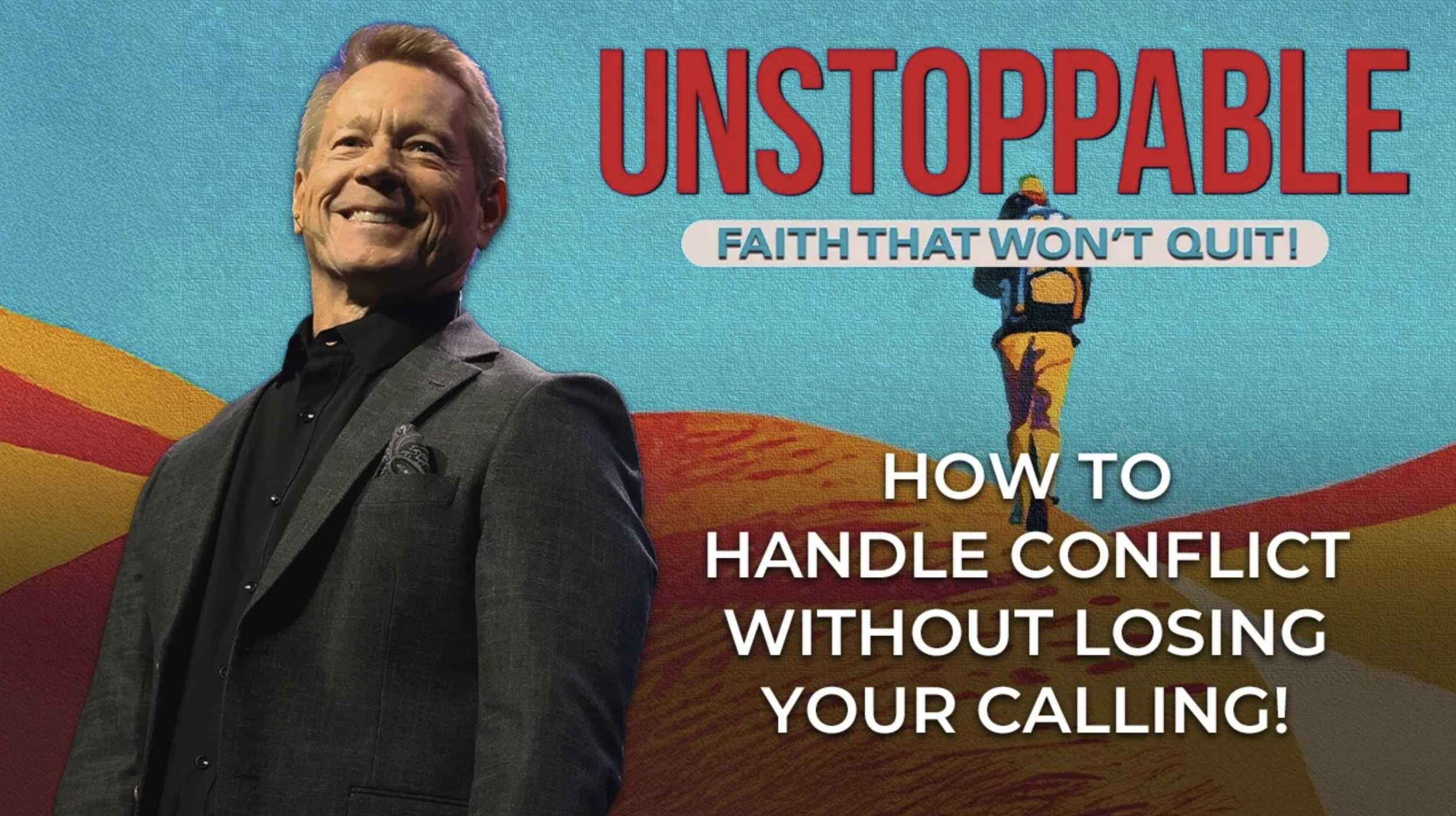
Unstoppable Faith: How to Handle Conflict Without Losing Your Calling
What if the sharpest disagreements between godly people could actually multiply God's kingdom? Paul and Barnabas faced such heated conflict over giving John Mark a second chance that they parted ways entirely—yet both continued serving faithfully in different directions. Pastor John Mark reveals how their "sharp disagreement" teaches us to face conflict honestly, guard our hearts from bitterness, and choose our calling over the conflict. Rather than destroying ministry, their split doubled it, proving God can turn detours into open doors. Don't let unresolved conflict paralyze your purpose—discover how to heal and keep serving faithfully!
Group Leader Guide
Sermon Recap 🎬
What if the sharpest disagreements between godly people could actually multiply God's kingdom? Paul and Barnabas faced such heated conflict over giving John Mark a second chance that they parted ways entirely—yet both continued serving faithfully in different directions. Pastor John Mark reveals how their "sharp disagreement" teaches us to face conflict honestly, guard our hearts from bitterness, and choose our calling over the conflict. Rather than destroying the ministry, their split doubled it, proving God can turn detours into open doors. Don't let unresolved conflict paralyze your purpose—discover how to heal and keep serving faithfully!
Ice Breaker 🧊
If you could have any animal as a pet, regardless of how impractical it might be, which animal would you choose and why?
Discussion Questions 💬
Pastor John Mark taught that Paul and Barnabas had a 'sharp disagreement' about whether to bring John Mark on their second missionary journey. What does this teach us about how even godly people can have serious conflicts?
The sermon explained that Paul didn't think it was wise to bring John Mark because he had left them during their first journey, while Barnabas (whose name means 'son of encouragement') wanted to give John Mark a second chance. This disagreement was so intense that they decided to part ways and go on separate missions.
Think about a time when you disagreed with someone you respect or care about. How did you handle it, and what could you learn from Paul and Barnabas's example?
The sermon emphasized 'facing conflict honestly' rather than over-spiritualizing disagreements. What's the difference between saying 'I don't think that's wise' versus 'God told me'?
Pastor John Mark pointed out that Paul simply said he didn't think bringing John Mark was wise, rather than claiming God had told him not to bring him. The pastor warned that when we say 'God told me,' we end the conversation and make it impossible for others to disagree respectfully.
How can you express your opinions and concerns in conflicts without shutting down healthy discussion or making others feel like they're arguing with God?
According to Hebrews 12:15, why is it dangerous to hold onto bitterness after a conflict? What does the sermon say about bitter roots?
The sermon quoted Hebrews 12:15, which warns that bitter roots 'cause trouble and defile many.' Pastor John Mark explained that bitterness never stays buried - it always grows roots, and whatever grows roots eventually produces fruit that hurts not just you but others around you, including family and coworkers.
Is there any bitterness you've been holding onto from a past disagreement? What steps could you take this week to 'get over it' as the pastor suggested?
The sermon showed that both Paul and Barnabas continued to serve faithfully after their disagreement, just in different directions. How did this actually benefit God's kingdom?
Instead of both men quitting ministry because of their conflict, Barnabas took John Mark and sailed to Cyprus, while Paul chose Silas and went through Syria and Cilicia. Pastor John Mark pointed out that their separation actually multiplied the ministry - now there were two missionary teams instead of one.
How might God use disagreements or 'detours' in your life to open new doors for service or growth that wouldn't have existed otherwise?
At the end of Paul's life, he asked Timothy to bring Mark because 'he is helpful to me in my ministry' (2 Timothy 4:11). What does this teach us about leaving room for future healing in relationships?
Pastor John Mark showed that even though Paul and Barnabas had such a sharp disagreement that they separated, Paul didn't permanently write off John Mark. Years later, Paul recognized that Mark had grown and become useful for ministry, even asking for him specifically near the end of his life.
Is there someone you've 'written off' because of a past conflict or disappointment? How might God want you to leave room for Him to work in that person's life and possibly restore the relationship?
Prayer 🙏
Ask for prayer requests from the group.
Pray for guidance on how to handle conflicts in a way that honors God.
Ask for the strength to forgive and not hold onto bitterness.
Request God’s help in finding paths for reconciliation where possible.
Seek wisdom in supporting and encouraging one another just as Barnabas did.
Rewatch the Sermon 📼

Unstoppable Faith: Called to Something Greater
What if God's whispering your name right now, calling you from where you are to something bigger? Paul heard Jesus on the Damascus road—transforming from church destroyer to gospel preacher in an instant. Pastor John Mark reminds us that God specializes in using the "wrong person heading the wrong direction for the wrong purpose," as shown in Paul's immediate preaching, showing that we don't need perfect preparation to start serving. Whether through Scripture, prayer, or circumstances, God is calling everyone to something. Don't spend another day warming up in the bullpen—step onto the field now!
Group Leader Guide
Sermon Recap 🎬
What if God's whispering your name right now, calling you from where you are to something bigger? Paul heard Jesus on the Damascus road—transforming from church destroyer to gospel preacher in an instant. Pastor John Mark reminds us that God specializes in using the "wrong person heading the wrong direction for the wrong purpose," as shown in Paul's immediate preaching, showing that we don't need perfect preparation to start serving. Whether through Scripture, prayer, or circumstances, God is calling everyone to something. Don't spend another day warming up in the bullpen—step onto the field now!
Ice Breaker 🧊
If you could have dinner with any fictional character, who would it be and why?
Discussion Questions 💬
Pastor John Mark shared that God called Paul through Acts 9:15-16, where God said Paul was 'a chosen instrument to proclaim my name to the Gentiles and their kings and to the people of Israel.' What does it mean to be God's 'chosen instrument,' and how might this apply to regular believers today?
In the sermon, Pastor John Mark explained that Paul received a specific calling from God to preach the gospel to non-Jewish people (Gentiles). God told Ananias that Paul was chosen for this mission, even though Paul had been persecuting Christians.
If you truly believed God had chosen you as His instrument for something specific, what fears or doubts would you need to overcome to say yes to that calling?
Pastor mentioned five ways God speaks to us today: through His Word, prayer, the church, circumstances, and through our pain. Which of these ways do you think you're most likely to recognize God's voice, and which might you be missing?
Pastor John Mark explained that while God spoke through burning bushes and visions in the Old Testament, today He primarily speaks through more accessible means like reading the Bible, praying, being part of a church community, life circumstances, and even through difficult experiences.
Think about a recent difficult situation in your life. How might God be trying to speak to you or call you to something through that experience?
Paul faced serious opposition and suffering for his calling, including beatings, imprisonments, and shipwrecks (2 Corinthians 11:23-27). Why do you think following God's call sometimes leads to hardship rather than an easy life?
The sermon emphasized that Paul's calling wasn't easy - he suffered greatly for preaching the gospel. Pastor John Mark pointed out that God told Ananias that Paul would suffer for Jesus' name, showing that answering God's call doesn't guarantee a comfortable life.
What kind of 'pushback' or challenges might you face if you fully committed to what you sense God calling you to do? How would you prepare yourself to handle that opposition?
Pastor John Mark said that Paul 'started preaching what he knew' immediately after his conversion, rather than waiting until he knew everything. What's the difference between being prepared and being over-prepared when it comes to answering God's call?
The sermon highlighted that Paul began preaching 'at once' in Acts 9:20, teaching about Jesus being the Son of God even though he was still learning. Pastor John Mark encouraged people to stop 'warming up in the bullpen' and start serving with what they already know.
What's one step you could take this week to act on what you already know God wants you to do, even if you don't feel completely ready or equipped?
The sermon listed several things everyone is called to: salvation, baptism, joining a church, repentance, serving others, leading, giving, going, and speaking out. Which of these areas feels most challenging for you right now, and what would it look like to take a step forward in that area?
Pastor John Mark emphasized that God doesn't just call pastors or church staff - He calls everyone to different aspects of following Him and serving others. He provided a comprehensive list of ways all believers are called to respond to God.
If you were to pick just one of these calling areas to focus on growing in over the next month, which would have the biggest impact on your relationship with God and others?
Prayer 🙏
Before we begin, does anyone have any prayer requests they would like to share?
Ask God to help us recognize His call in our lives, no matter where we are in our faith journey.
Pray for the courage to overcome any crises of faith and to say "yes" to what God is asking of us.
Seek strength and patience to endure any suffering or challenges as we walk in God's path for us.
Request God's guidance in making necessary adjustments in our lives to align with His will.
Rewatch the Sermon 📼

Unstoppable Faith: Unstoppable Faith Begins with Real Conversion
What if the very person you think God could never reach is exactly who He's pursuing? Saul breathed murderous threats against Christians—present at Stephen's stoning, dragging believers to prison—yet God interrupted his Damascus journey with blinding light and a life-changing question. Pastor John Mark reveals how this Pharisee's arrogant confidence crumbled into humble transformation, proving God turns our misdirected passions into His greatest instruments. Whether you're climbing the wrong ladder of success or think you're beyond redemption, this message shows how divine interruptions become divine appointments. Don't miss this powerful start to our "Faith That Won't Quit" series!
Group Leader Guide
Sermon Recap 🎬
What if the very person you think God could never reach is exactly who He's pursuing? Saul breathed murderous threats against Christians—present at Stephen's stoning, dragging believers to prison—yet God interrupted his Damascus journey with blinding light and a life-changing question. Pastor John Mark reveals how this Pharisee's arrogant confidence crumbled into humble transformation, proving God turns our misdirected passions into His greatest instruments. Whether you're climbing the wrong ladder of success or think you're beyond redemption, this message shows how divine interruptions become divine appointments. Don't miss this powerful start to our "Faith That Won't Quit" series!
Ice Breaker 🧊
If you could live in any fictional world from a book, movie, or TV show, where would you choose and why?
Discussion Questions 💬
Pastor John Mark described Paul as someone who was 'climbing the ladder of spiritual success in his own power' but realized 'that ladder was leaning on the wrong wall.' What does this mean, and how might people today be climbing the wrong ladder?
Paul had impressive religious credentials - he was trained by Gamaliel, was a Pharisee, and considered himself 'faultless' according to the law. But he realized that trying to earn God's favor through works and religious achievement was the wrong approach entirely.
What 'ladders' in your own life might you be climbing to try to earn approval from God or others? How can you tell if you're trusting in your own efforts rather than God's grace?
Paul's conversion began when Jesus asked him one simple question: 'Saul, Saul, why do you persecute me?' (Acts 9:4). Why was this question so powerful in changing Paul's entire perspective?
Pastor John Mark pointed out that 'Saul had all the answers until Jesus asked him one question.' This moment forced Paul to confront the reality that he had been fighting against God himself while thinking he was serving God.
If Jesus were to ask you one penetrating question about your life right now, what do you think it would be? How might honestly answering that question change your direction?
The sermon emphasized that 'God will interrupt your direction' when you're heading the wrong way, using examples of Paul's light on the road and Jonah's storm at sea. How do you recognize when God might be trying to get your attention?
Pastor John Mark explained that God loves us too much to let us continue in the wrong direction. He used the examples of Paul being blinded by the light and Jonah being swallowed by a fish as ways in which God interrupts our harmful paths.
Looking back on your life, can you identify times when God may have been trying to redirect you? How did you respond, and what did you learn from those experiences?
Paul went from persecuting Christians to becoming a humble follower who had to be 'led by the hand' into Damascus. What role does humility play in genuine conversion and spiritual growth?
The sermon showed how Paul went from being proud and self-confident to being physically helpless and dependent on others. Pastor John Mark noted that 'you can either humble yourself or God will humble you.'
In what areas of your life do you struggle with pride or self-reliance? How might embracing humility actually be a sign of strength rather than weakness?
Ananias was afraid to help Paul because of his reputation, but God called Paul 'my chosen instrument.' What does this teach us about God's ability to transform anyone and use their past for good?
Even though Paul had been 'breathing out murderous threats' against Christians and was known for dragging believers to prison, God had a specific plan to use all of Paul's training, passion, and abilities for building the church instead of destroying it.
What parts of your background, skills, or even past mistakes might God want to transform and use for his purposes? How does knowing that God can use anyone encourage you about your own potential impact?
Prayer 🙏
Before we close, let's take a moment to hear any prayer requests. Afterward, consider praying over these points:
Ask God to give each of us the courage to have a faith like Paul that won't quit despite trials.
Pray for God to open our eyes to any direction in our lives that needs spiritual redirection.
Seek God's guidance in using our past experiences and talents for His glory, just as Paul did.
Thank God for the gift of grace and the new purpose He places in our lives.
Rewatch the Sermon 📼

Unstoppable Faith: Unstoppable Faith Starts with a Risen Savior
What if the very failures that make you want to hide could become your greatest comeback story? Pastor John Mark reveals how Peter went from denying Jesus three times to fearlessly leading the early church, proving that an unstoppable faith doesn't mean perfect performance—it means divine resilience that keeps moving even when it's hard. Through the historical reality of Easter's empty tomb and the powerful testimonies of disciples who died for what they witnessed, this message transforms doubt and failure into stepping stones for unshakeable faith. Ready to discover how your setbacks can become your greatest ministry? Don't let this resurrection truth pass you by—watch now and let God turn your story around!
Group Leader Guide
Sermon Recap 🎬
What if the very failures that make you want to hide could become your greatest comeback story? Pastor John Mark reveals how Peter went from denying Jesus three times to fearlessly leading the early church, proving that an unstoppable faith doesn't mean perfect performance—it means divine resilience that keeps moving even when it's hard. Through the historical reality of Easter's empty tomb and the powerful testimonies of disciples who died for what they witnessed, this message transforms doubt and failure into stepping stones for unshakeable faith. Ready to discover how your setbacks can become your greatest ministry? Don't let this resurrection truth pass you by—watch now and let God turn your story around!
Ice Breaker 🧊
If you could live in any fictional world for a week, where would it be and why?
Discussion Questions 💬
Pastor John Mark explained that Christianity wasn't built on a philosophy, but on a historical event - the death, burial, and resurrection of Jesus Christ. What evidence did he share to show that the resurrection actually happened?
Pastor John Mark mentioned several pieces of evidence, including the empty tomb, over 500 witnesses who saw Jesus alive, embarrassing testimony about the disciples being afraid while the women were courageous, and the fact that early Christians changed their worship from Saturday to Sunday.
How does knowing that your faith is based on historical facts rather than just feelings or philosophy change how you approach doubts or challenges to your beliefs?
The sermon focused on the two criminals crucified alongside Jesus: one rejected Him, and the other accepted Him. What was the difference between their responses, and what does this teach us about salvation?
Pastor John Mark explained that both criminals were in the same situation - dying on crosses - but one hurled insults at Jesus while the other acknowledged his own sin and asked Jesus to remember him in His kingdom. Jesus promised the believing thief would be with Him in paradise that very day.
If salvation can happen even in someone's final moments, like the thief on the cross, what does this reveal about God's grace, and how should this affect how we view people who seem far from God?
Pastor John Mark shared about 'Doubting Thomas' and created an acrostic to help defeat doubt. What were the steps he suggested for overcoming doubt in our faith?
The pastor's acrostic for defeating doubt was: Don't move away from God when you doubt, Open your heart honestly to God in prayer, Understand the truth by diving into Scripture and study, Believe facts over feelings, and Take the next step of faith.
Which of these steps for dealing with doubt resonates most with you right now, and what practical action could you take this week to strengthen your faith in that area?
The sermon mentioned Peter's failure when he denied Jesus three times, but then showed how Jesus restored him. How did Jesus deal with Peter's failure, and what does this teach us about overcoming our own failures?
Pastor John Mark explained that Jesus asked Peter 'Do you love me?' three times (matching the three denials), and each time told him to 'feed my sheep.' Jesus took Peter from his past failures to a future where God could use him in ministry.
What failure or mistake in your past do you still struggle with, and how might Jesus be calling you to move from shame about that failure into serving others?
Pastor John Mark pointed out that all the disciples eventually died as martyrs rather than living for money, power, or pleasure. How does their willingness to die for their faith support the truth of the resurrection?
The pastor explained that if the resurrection was a fraud, the disciples would have been motivated by money, sex/lust, or power - the usual reasons people commit fraud. Instead, they all died broke, powerless, and celibate, which shows they truly believed Jesus had risen from the dead.
While most of us won't be called to martyrdom, what are some smaller ways you could demonstrate that your faith in the risen Jesus is more important to you than comfort, popularity, or material success?
Prayer 🙏
Begin by sharing any personal prayer requests with each other.
Ask God to strengthen our faith to be unwavering through life's challenges.
Pray for courage to face doubts and clarity to overcome them with truth.
Seek guidance to live out personal experiences of the resurrection's power daily.
Rewatch the Sermon 📼

Real Faith: Real Faith Rides with Confidence
What does authentic faith look like in everyday life? In this powerful opening message of the "Real Faith" series, Pastor John Mark unpacks how the disciple John's transformation from hot-headed fisherman to the "apostle of love" demonstrates God's power to change us.
Group Leader Guide
Sermon Recap 🎬
Have you ever wondered what makes Palm Sunday more than just a celebration with palm branches? Pastor John Mark reveals how Jesus's triumphal entry holds a profound lesson about authentic faith. Through the lens of both the eager crowds and confused disciples, he unpacks how "real faith rides with confidence"—not in political solutions, but in Christ's completed work. Drawing from powerful moments like Jesus weeping over Jerusalem and prophetic details fulfilled 500 years later, this message illuminates the journey from surface-level worship to deep, transformative trust. Whether you're questioning faith or seeking deeper confidence in God's promises, this timely Palm Sunday message speaks to both seekers and believers. Don't miss this chance to discover how Jesus turns our "at first" confusion into lasting conviction.
Ice Breaker 🧊
If you could switch lives with any fictional character for a day, who would it be and why?
Discussion Questions 💬
Pastor Mark discussed how the Palm Sunday crowd had a 'shallow understanding' of Jesus's purpose in Jerusalem. What were they expecting from Jesus versus what His actual mission was?
The sermon explained that the crowd wanted Jesus to fix Rome and Jerusalem politically, but Jesus had come for a much bigger spiritual purpose that included His death and resurrection.
When have you found yourself having expectations of God that were different from His actual plans for your life?
Looking at John 12:16, why is it significant that 'at first his disciples did not understand' what was happening, and only after Jesus was glorified did they realize the truth?
Pastor Mark emphasized how even the disciples, who walked with Jesus, didn't fully understand until after the resurrection, showing it's okay to be an 'at first' Christian with questions.
What aspects of your faith journey started with confusion or questions but later became clear to you?
The sermon discussed three key things we need to know: who Jesus really is, what Jesus really did, and how to attain salvation. Why are these three elements crucial for having confidence in our faith?
Pastor Mark explained that our salvation is based not on our performance but on what Jesus did on the cross, in the tomb, and on Easter morning.
How has understanding these three elements changed your approach to living out your faith?
Pastor Mark explained that real faith 'believes right, loves right, and lives right.' How do these three aspects work together to demonstrate authentic faith?
The sermon referenced 1 John 5:1-3, showing that loving God means keeping His commands, and these commands aren't burdensome but are a blessing.
Which of these three aspects (believing, loving, living) do you find most challenging in your own walk with God, and why?
How does the fulfilled prophecy of Zechariah 9:9 (Jesus riding into Jerusalem on a donkey) demonstrate God's attention to detail and His sovereign plan?
The sermon highlighted how God predicted specific details about Palm Sunday 500 years before it happened, even down to the type of animal Jesus would ride.
What situations in your life have helped you see God's detailed planning and care for you personally?
Prayer 🙏
Begin by sharing any prayer requests.
Ask God to help us recognize the true nature of Jesus as our Savior and King.
Pray for the confidence to trust in God’s plan and guidance, despite any misconceptions we may have.
Request strength to live out our faith actively and openly, by loving others as Jesus did.
Seek understanding and clarity for those still in the "at first" stage of their faith journey.
Rewatch the Sermon 📼

Real Faith: Real Faith Lives as God’s Child
What does authentic faith look like in everyday life? In this powerful opening message of the "Real Faith" series, Pastor John Mark unpacks how the disciple John's transformation from hot-headed fisherman to the "apostle of love" demonstrates God's power to change us.
Group Leader Guide
Sermon Recap 🎬
Have you ever wondered what it truly means to be called a child of God? Pastor John Mark unpacks this profound truth from 1 John, revealing how God's lavish love transforms us from spiritual orphans into beloved sons and daughters. Through vivid DNA analogies and the touching story of the prodigal son, he shows how our heavenly Father runs toward us with grace rather than condemnation. Whether you're seeking assurance of salvation or longing to come home from a distant country, this message offers hope and clarity about your identity in Christ. Don't miss this powerful reminder of God's adopting love and the glorious future that awaits His children.
Ice Breaker 🧊
If you could only eat one food for the rest of your life, but it had to be eaten in alphabetical order, what would your first meal be?
Discussion Questions 💬
Pastor John Mark explains that God doesn't have grandchildren, only children. What does this mean in terms of salvation, and how does it relate to John 1:12?
The sermon emphasizes that salvation doesn't come with a family membership - each person must individually receive and believe in Jesus Christ to become a child of God.
How has your personal faith journey been influenced by your family's beliefs, and what steps have you taken to make your faith your own?
The sermon discusses how being a child of God starts with His love, not our performance. How does this perspective change the way we approach our relationship with God?
Pastor John Mark emphasized that God 'lavished' His love on us first, rather than waiting for us to clean ourselves up or earn His love.
In what areas of your life do you find yourself trying to earn God's love rather than receiving it freely?
The story of the Prodigal Son was used to illustrate how a child of God might not always look like one. What does it mean that 'grace will always outrun your guilt'?
In the sermon, it was noted that while the son walked slowly in his guilt, the father ran toward him with grace, showing God's eagerness to restore His children.
Have there been times in your life when you felt too guilty to approach God? How does this message about God's grace change that perspective?
The sermon describes three tenses of salvation: justification (I was saved), sanctification (I am being saved), and glorification (I will be saved). How do these different aspects work together in a believer's life?
Pastor John Mark explained how salvation involves past forgiveness, present growth, and future transformation into Christ's likeness.
Which of these three aspects of salvation do you find yourself thinking about most often, and why?
According to 1 John 3:1-2, what does it mean that we will 'be like Him' when Christ appears, and how should this future hope affect our present actions?
The sermon discusses how Christians can look forward without fear because we will be transformed to be like Christ, and this hope should lead us to purify ourselves.
How does the promise of future transformation influence your daily choices and priorities today?
Prayer 🙏
Begin by sharing any personal prayer requests.
Ask God to help us live as His children every day, not just on Sundays.
Pray for the strength to deal honestly with sin and seek forgiveness.
Pray for the courage to stand firm in God's truth against false teachings.
Rewatch the Sermon 📼

Real Faith: Real Faith Stands Firm in the Truth
What does authentic faith look like in everyday life? In this powerful opening message of the "Real Faith" series, Pastor John Mark unpacks how the disciple John's transformation from hot-headed fisherman to the "apostle of love" demonstrates God's power to change us.
Group Leader Guide
Sermon Recap 🎬
Have you ever wondered what makes faith real in a world full of counterfeits? Pastor John Mark dives deep into 1 John, revealing how authentic faith transforms everyday life. Through powerful insights into identity in Christ, worldly temptation, and discerning truth from deception, he shows that real faith isn't just a Sunday-morning experience—it's a daily walk that stands firm against life's challenges. Drawing from his candid teaching on Jesus' desert temptations, Pastor John Mark offers practical wisdom for resisting temptation and spotting false teaching. Don't miss this essential message that will equip you to live out genuine faith in an increasingly complex world. Watch now to discover how to stand unshakeable in your spiritual journey!
Ice Breaker 🧊
If you could instantly become an expert in any hobby in the world, what would it be and why?
Discussion Questions 💬
Pastor John Mark explains that our identity in Christ is based on God's forgiveness, not our performance. Why is this distinction so important for living out our Christian faith?
He emphasized that if we think we performed well enough to receive salvation, we might question our identity when our performance fails. Our identity comes from being forgiven and brought into God's family.
In what areas of your life do you find yourself basing your spiritual worth on performance rather than God's forgiveness?
The sermon discusses three ways Satan tempts us: lust of the flesh, lust of the eyes, and pride of life. How do these same temptation patterns show up in modern life?
Pastor John Mark showed how Satan used these same three temptation strategies with Jesus in Luke 4, tempting Him with appetite (bread), ambition (kingdoms), and pride (jumping from the temple).
Which of these three areas of temptation do you find most challenging in your daily life, and what strategies from the sermon's TEMPTED acrostic could help you combat it?
Based on 1 John 2:19, how should we understand when someone leaves the faith or 'deconstructs' their beliefs?
The sermon explains that when people walk away from faith, it often indicates they never truly had salvation, rather than losing it. Like the prodigal son, true believers who stray will return.
How can we show love and concern for those who walk away from faith while still standing firm in biblical truth?
The sermon presents five ways to identify false teachers. Why is it important to test what we hear against multiple criteria rather than just one?
Pastor John Mark advised being careful if someone fails one test, keeping distance if they fail two, and running if they fail three. The tests include their view of Jesus, salvation, Scripture, lifestyle matching message, and whether they cause division.
What sources of spiritual teaching do you regularly consume, and how would they measure up against these five tests?
According to 2 Corinthians 5:17 and 1 Peter 2:9, what specific aspects of our identity in Christ should shape how we view ourselves?
The sermon emphasized that we are a chosen people, royal priesthood, holy nation, and God's special possession - not spiritual clearance rack items but royal inventory.
How would your daily decisions and interactions with others change if you consistently viewed yourself through the lens of these biblical identities?
Prayer 🙏
Ask for prayer requests from the group.
Pray for the strength to remember and embrace our identity in Christ as it is based on forgiveness, not performance.
Pray for wisdom and strength to reject the world's temptations and stand firm in faith.
Pray for discernment to recognize and steer clear of false teachings, staying true to God's word.
Rewatch the Sermon 📼

Real Faith: Faith That Shows Up Every Day
What does authentic faith look like in everyday life? In this powerful opening message of the "Real Faith" series, Pastor John Mark unpacks how the disciple John's transformation from hot-headed fisherman to the "apostle of love" demonstrates God's power to change us.
Group Leader Guide
Sermon Recap 🎬
What does authentic faith look like in everyday life? In this powerful opening message of the "Real Faith" series, Pastor John Mark unpacks how the disciple John's transformation from hot-headed fisherman to the "apostle of love" demonstrates God's power to change us. Through an intimate exploration of 1 John, we discover that genuine faith isn't just Sunday belief—it's daily choices that reflect God's character, regular time in His Word, encouraging others, and humbly walking in the light. Whether you're wrestling with doubt or seeking deeper spiritual growth, this message offers practical wisdom for living out real, transformative faith. Don't miss this foundational teaching that will shape your daily walk with Jesus.
Ice Breaker 🧊
If you could have dinner with any historical figure (other than a family member or a Bible character), who would it be and why?
Discussion Questions 💬
How does the sermon's emphasis on examining ourselves rather than others challenge common Christian behavior?
The pastor referenced Paul's words about examining ourselves to see if we're in the faith, noting that we shouldn't go around looking at everybody else.
What specific areas of your faith life need self-examination rather than focusing on others' shortcomings?
Pastor John Mark discussed how John went from being a 'Son of Thunder' who wanted to call down fire on enemies, to being known as 'the disciple Jesus loved.' How does this transformation demonstrate the power of spending time with Jesus?
The sermon described how John and his brother were originally hot-headed fishermen who wanted to destroy those who opposed Jesus, but after spending time with Jesus, John became known for his messages of love and compassion.
What areas of your own character have been transformed through your relationship with Jesus?
The sermon discusses how real faith bears fruit naturally, like an apple or an orange tree. Why is this a powerful metaphor for how Christians should demonstrate their faith?
Pastor referenced John 15:8 and explained how fruit trees don't have to announce what they are - they simply produce fruit that makes it obvious.
What kind of 'fruit' is visible in your life that naturally shows others your faith without having to announce it?
The sermon discusses how isolation puts a lid on joy while fellowship multiplies it. How does this relate to God's statement in Genesis that 'it is not good for man to be alone'?
The pastor emphasized that we were never created to live in isolation and that fellowship is both vertical (with God) and horizontal (with others).
In what ways has Christian fellowship enhanced or multiplied joy in your own life?
According to 1 John 1:8, why is genuine humility such an important aspect of real faith that shows up every day?
The sermon explained that claiming to be without sin is self-deception, and true humility acknowledges our ongoing need for God's grace.
How can you cultivate genuine humility while still confidently growing in your faith?
Prayer 🙏
Ask for prayer requests from the group.
Pray for understanding and applying the concept of "real faith" as preached by Pastor.
Ask God to help us walk in the light and bear fruit that reflects His character.
Seek guidance in overcoming any doubts about our faith through His word.
Rewatch the Sermon 📼
Pray: Break the Chains - Experiencing the Freedom of Forgivness
A common question Pastor John Mark receives from people who want to have a better relationship with God is, “How should I pray? It feels like my prayers bounce off the ceiling. I must not be very good at it.” In this series, we examine what it means to pray, what the Bible says about prayer, and that God is concerned with the attitude of our heart above all else.
Group Leader Guide
Sermon Recap 🎬
Are you carrying the weight of unforgiveness in your life? Pastor John Mark reveals how unconfessed sin and harbored resentment can chain us to guilt and bitterness, draining our emotional and spiritual vitality. Through the Lord's Prayer, he unpacks Jesus' profound teaching that links receiving God's forgiveness with extending it to others. Using compelling research and the practical REACH model (Recall, Empathize, Altruistic gift, Commit, Hold on), this message offers hope and practical steps for breaking free from unforgiveness. Whether you're struggling with past hurts or seeking deeper spiritual freedom, discover how forgiveness sets both the forgiver and forgiven free. Don't miss this transformative message about God's grace and healing power.
Ice Breaker 🧊
If you could instantly master any skill in the world, what would it be and why?
Discussion Questions 💬
Pastor John Mark notes that heavy hearts often stem from what we're holding inside rather than from what happened to us. How does holding onto unforgiveness affect our mental, physical, and spiritual well-being?
The sermon cites research showing that forgiveness reduces stress, anxiety, depression, and improves relationships and overall life satisfaction
What unresolved hurt or unforgiveness might you be holding onto that is weighing you down emotionally or spiritually?
Looking at Psalm 32:3-5, what are the consequences of keeping silent about our sins versus confessing them to God?
The passage describes how unconfessed sin caused physical and emotional drain, while confession brought God's forgiveness and relief
When have you experienced the weight of unconfessed sin and the freedom that came with confession?
The sermon presents the REACH model for learning to forgive (Recall, Empathize, Altruistic gift, Commit, Hold on). Which of these steps do you think is most challenging and why?
The sermon explains this as a research-backed method for learning to forgive, even when it feels impossible
Which step in the REACH model could help you most with a specific situation where you're struggling to forgive?
How does the parable of the unforgiving servant (Matthew 18) illustrate the danger of receiving grace but not extending it to others?
The sermon describes how the servant received forgiveness for a huge debt but refused to forgive someone else's small debt
In what ways might you be like the unforgiving servant, having received God's forgiveness but struggling to extend it to others?
Pastor John Mark says, 'forgiveness must be walked out, not just talked out.' What does this mean practically in daily life?
The sermon emphasizes that just talking about or reading about forgiveness isn't enough - it requires active implementation
What specific actions could you take this week to 'walk out' forgiveness in a situation you're facing?
Prayer 🙏
Ask for any prayer requests from the group.
Pray for strength to release any lingering unforgiveness in our hearts.
Seek God's help to confess sins and experience the fullness of forgiveness.
Request guidance in building relationships based on kindness and compassion.
Ask for the courage to extend forgiveness to others as we have been forgiven.